
What are the Differences Between Subdural and Epidural Hematomas?
Both subdural and epidural hematomas are severe brain injuries. But they have differences that affect your long-term recovery and how you litigate your brain injury lawsuit.
Our brain is the center of who we are. It controls all our bodily functions, our ability to breathe, move, think, and feel. When the brain suffers, the consequences can be devastating.
Traumatic brain injury (TBI) is among the worst kind of injury you can suffer. TBIs can result from workplace accidents, car crashes, falls, or even violent assaults.
Two of the most serious forms of TBI are subdural hematomas and epidural hematomas. The medical implications of these two types of injuries, as well as their long-term consequences, are distinct and crucial when developing evidence during litigation and when negotiating a personal injury settlement.
Subdural or epidural hematoma cases can be worth millions of dollars. If you have been diagnosed with either type of injury, this guide will explain the differences in these conditions from a medical and legal perspective. It will also explain how these differences affect your workers compensation or personal injury claim.
Keep reading to learn more.
Then call (804) 251-1620 or (757) 810-5614 to speak with a top-ranked brain injury lawyer in Virginia.
Basics of Cranial Hematomas
You have developed a hematoma when blood pools outside a blood vessel like a vein or an artery. Trauma usually causes this condition.
When this collection of blood occurs in the brain, it can compress brain tissue, increase intracranial pressure, and threaten both life and long-term neurological function.
The two most common types of cranial hematomas associated with trauma are:
-
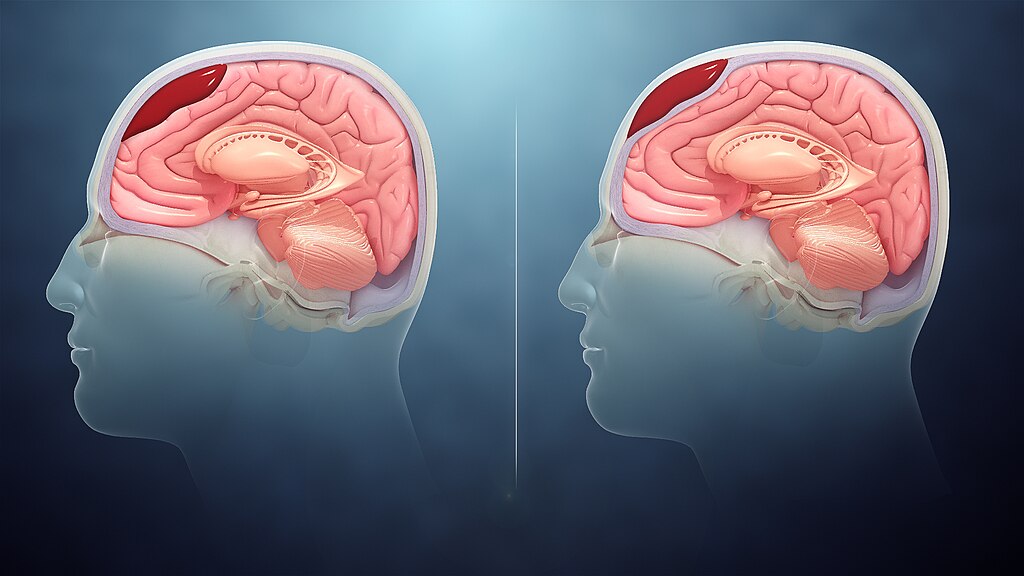
- Subdural Hematoma occurs when you have bleeding between the outer membrane covering your brain (the dura mater) and the middle membrane covering the brain (the arachnoid).
-
- Epidural Hematoma occurs when you have bleeding between the dura mater and your skull. The space between the dura matter and the skull is called the epidural space.
Both types of cranial hematomas require urgent medical attention and carry significant risks—but they differ in their causes, progression, and outcomes.
Subdural Hematoma
A subdural hematoma, also known as a subdural hemorrhage, can result from any head trauma, from mild bumps to high-impact hits.
Medical providers classify subdural hematomas as acute, subacute, or chronic.
An acute subdural hematoma is a life-threatening injury with rapid bleeding that requires immediate medical treatment. In contrast, subacute and chronic subdural hematomas have slower bleeding, which means it can take hours, days, or even weeks for enough blood to pool and compress the brain so you have symptoms. Chronic subdural hematomas, especially in elderly individuals or those on blood thinners, can be mistaken for dementia or stroke.
Symptoms of subdural hematoma include:
-
- Persistent or worsening headache
-
- Confusion, memory issues, or disorientation
-
- Slurred speech or difficulty walking
-
- Seizures
-
- Weakness on one side of the body
Treatment often includes burr hole drainage, craniotomy, or intensive neurological monitoring.
Outcomes vary widely.
Although many individuals who undergo an emergency craniotomy to evacuate a subdural hematoma recover with minimal damage, the mortality rate between the injury and surgery is high. One source found the death rate for acute subdural hematomas near 20 percent when not associated with another brain injury but nearly 50% when accompanied by a cerebral contusion or laceration. Quick detection of a subdural hematoma, therefore, is critical to rehabilitation.
In my experience, people who survive a subdural hematoma have a decrease in their thinking or reasoning abilities or ability to stay on-task without needing breaks due to headaches. A return-to-work may never happen, or there will be extensive disability and missed time.
Epidural Hematoma
High-impact trauma, such as a motorcycle crash, violent attack, motor vehicle collision, or sports injury, causes nearly all epidural hematomas. Specifically, the trauma results in a skull fracture that tears the middle meningeal artery, causing bleeding.
Epidural hematomas represent a small percentage of head injuries, less than five percent. You are much more likely to sustain a subdural hematoma than an epidural hematoma.
The classic symptom pattern of an epidural hematoma includes:
-
- Loss of consciousness
-
- A brief “lucid interval” where the person appears normal
-
- Sudden, rapid decline as pressure builds inside the skull
This condition is a true neurosurgical emergency. A craniotomy to evacuate the hematoma, relieve pressure, and stop the brain bleeding is often lifesaving.
Outcomes are similar or better with epidural hematomas compared to subdural hematomas—if treated quickly. Delay in diagnosis or surgery can lead to brain herniation, coma, or death.
Permanent medical restrictions are still likely with an epidural hematoma. Although one study found that more than 75% have a good recovery after surgery to treat an epidural hematoma, that same study found that a significant percentage had a poor outcome or moderate disability following care.
Subdural vs. Epidural Hematoma: Key Differences
| Feature | Subdural Hematoma | Epidural Hematoma |
| Location | Between dura and arachnoid | Between dura and skull |
| Bleeding source | Venous | Arterial |
| Imaging shape | Crescent (concave) | Lens-shaped (biconvex) |
| Onset | Slow or gradual | Rapid after trauma |
| Prognosis | Often worse | Better with rapid treatment |
What Happens During a Traumatic Brain Injury Resulting in a Subdural or Epidural Hematoma?
When the brain experiences trauma—whether from a direct blow, rapid acceleration-deceleration (such as with whiplash in a car accident where your head suddenly jerks forward and then back), or penetrating injury—a cascade of events occurs that can damage both the structure and function of the brain. Blood vessels may tear, releasing blood into areas of the brain where it doesn’t belong, forming hematomas. Brain tissue may swell, pushing against the rigid skull and increasing pressure that can choke off blood flow and oxygen supply.
In the case of a subdural hematoma, this pressure may build more slowly, sometimes giving the false appearance that everything is normal—until it isn’t. Small tears in the veins can cause gradual bleeding. Over time, the pressure can lead to behavioral changes, such as increased irritability or aggression, motor impairments like difficulty walking or loss of coordination, or even coma.
Epidural hematomas, in contrast, act like a ticking time bomb. The bleeding is fast and forceful, often arterial, and the person can deteriorate in minutes. It’s common for someone with an epidural bleed to seem fine after the injury, then suddenly lose consciousness as the pressure skyrockets.
Beyond the hematoma itself, the brain may suffer axonal shearing—tiny tears in the connections between brain cells. This type of damage is invisible to scans but can cause permanent cognitive and emotional changes.
Long-term effects of TBI can include memory problems, speech difficulties, depression, epilepsy, and difficulty focusing—impacting not just health but relationships, work, and daily life.
Understanding Your Rights If You Suffer a Cranial Hematoma
A brain hematoma can change your life in an instant—whether it happened on the job or off the clock because of someone else’s carelessness. No matter the cause, you may have a right to financial compensation and long-term support.
If your injury occurred at work, the workers compensation system is there to help. It can cover your medical treatment, replace part of your lost income, and provide assistance such as job retraining if you are unable to return to your previous position. In the most serious brain hemorrhage cases, you could qualify for permanent total disability benefits. These benefits provide long-term financial support beyond the 500-week cap applicable to most cases. If a brain injury leads to death, the system may also provide benefits to your family.
If someone else was at fault for the incident resulting in a subdural or epidural hematoma—like a distracted driver, an unsafe property, or a contractor who didn’t follow safety rules—you may file a civil action for damages. This kind of claim lets you seek full compensation for what you’ve been through and what you may go through in the future, including pain and suffering, diminished earning capacity, and the loss of independence and mobility. In some hematoma cases, damages may include compensation for in-home care, therapy, medical equipment, and help with planning for your future needs.
Keep in mind: brain injuries—especially milder ones—are often misunderstood or underestimated by insurance companies. Just because symptoms aren’t obvious doesn’t mean the damage isn’t real. That’s why having an experienced attorney on your side can make a big difference. A skilled lawyer will understand the complexities of brain injuries and fight to make sure your case is taken seriously—by insurance companies, judges, and juries alike.
Contact Our Virginia-Based Traumatic Brain Injury Specialists for a Free Consultation
If you or a loved one has suffered a subdural or epidural hematoma—or any form of traumatic brain injury—you don’t have to face the legal and medical aftermath alone. These injuries can affect every part of your life, and the road to recovery may involve years of care, therapy, and financial burden.
We help clients who have suffered subdural and epidural hematoma in Fairfax County, Prince William County, Virginia Beach, Chesterfield County, Loudoun County, Henrico County, Richmond, Newport News, Roanoke, Arlington County, and beyond, providing experienced legal representation for traumatic brain injury claims across Northern, Central, and Coastal Virginia.
Our network of personal injury lawyers, investigators, and neurologists has helped hundreds of clients across Virginia navigate brain injury cases involving workers compensation, auto accidents, falls, and more. We have a proven system for effectively gathering expert testimony, calculating long-term damages, and fighting aggressively for the full compensation you deserve.
Call us today at (804) 251-1620 or email cpollardjba@gmail.com to schedule your free consultation.
Remember, you don’t pay a cent unless we win your case.
Useful Links
National Institute of Neurological Disorders and Stroke (NINDS) – Traumatic Brain Injury (TBI)
https://www.ninds.nih.gov/health-information/disorders/traumatic-brain-injury-tbi
Health.com – Signs and Symptoms of a Traumatic Brain Injury (TBI)
https://www.health.com/traumatic-brain-injury-symptoms-8605050
PubMed Central – Traumatic Brain Injury Pathophysiology and Treatments: Early, Intermediate, and Late Phases Post-Injury
https://pmc.ncbi.nlm.nih.gov/articles/PMC3907812/
PubMed Central – Pathophysiology and Clinical Management of Moderate and Severe Traumatic Brain Injury in the ICU
